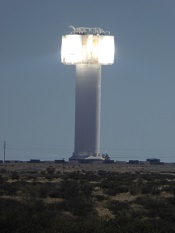
The Sun Tower dominates the skyline for miles around Upington.
Lithops West of Upington
This trip, first planned pre-pandemic in 2019, finally went ahead in April 2022. It was during this COVID enforced time delay, our friend and Conophytum expert Terry Smale passed away, having expressed a wish in his earlier days for his ashes to be scattered in Namaqualand. I could hardly visit the area without fulfilling his wish, and it seemed to me appropriate the exact spot be somewhere around the C. smaleorum locality (named in Terry's honour), just so long as I could find it. Then as luck would have it, I discovered another Conophytum maestro Andy Young, who knew the locality well, would be in the same area at the same time. More on that shortly.
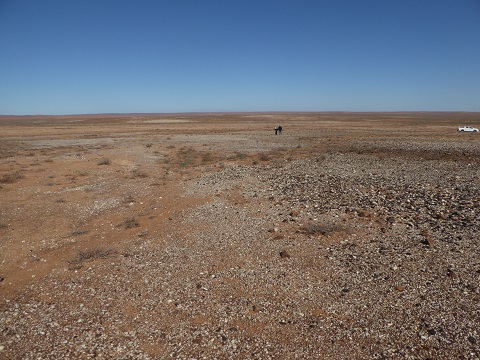
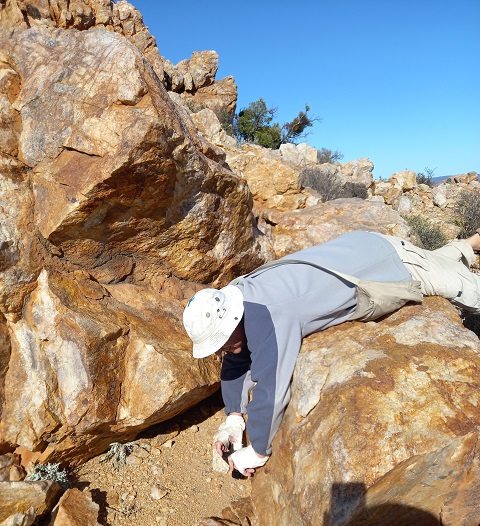
My primary intention was to photograph habit Lithops at localities new to me. My wife Debra (Debbie) was my travelling companion and we had arranged to meet our good friend and fellow Lithops enthusiast Dr. Ronald (Ronnie) Uijs, in Springbok. Cape Town resident Ronnie is well known for his habitat jaunts to Lithops localities and had been of enormous help to us on several previous occasions (Fig 1). As a student of the late Professor Cole I stick here with the Cole Lithops classifications.
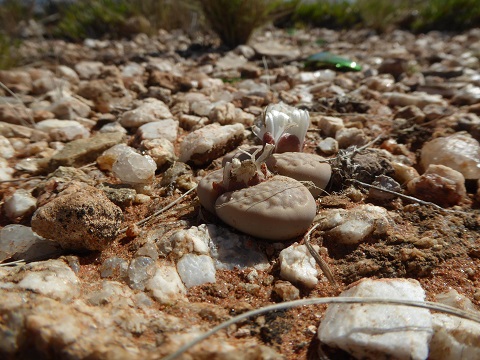
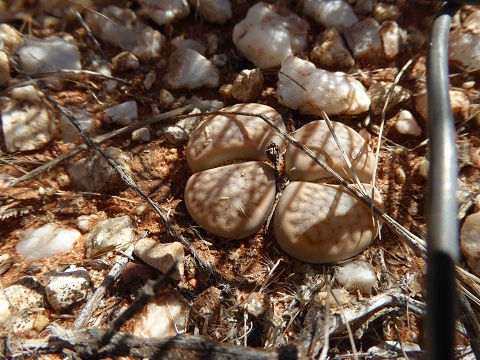
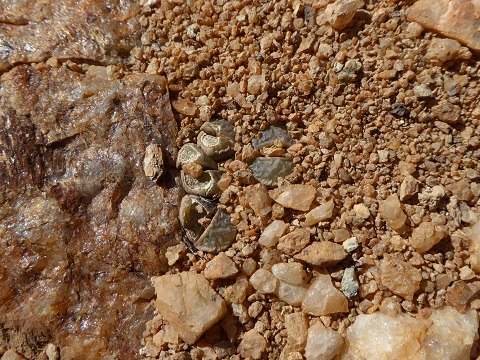
Getting to Springbok from Upington Airport in the Northern Cape Province was a pleasant drive passing close to a few localities where in previous years we had seen Lithops. Another development between arranging this trip and actually taking it was the dreadful rise in plant poaching, which made me think twice before attempting to find L. julii subsp./var. fulleri at two localities I had previously visited. I need not have worried however because at both places plants were flourishing. One locality was on a private farm where the farmer, now a familiar face to us, once again led us to the Cole locality C416 (Fig 2). I think this was the third time we had visited this particular spot, but never before had I seen so many pristine specimens. The term has been used before, but the ornate markings on these plants really do contrast markedly with the harshness of the semi-desert surroundings. This was all the more remarkable because this farm had endured eight years of drought before recent rains, a time which saw the deaths of the majority of the farmer’s sheep. Yet somehow the Lithops had endured, and were now sporting flowers, some with a distinctly pink tinge. A similar situation existed further west where we again found L. julii subsp./var. fulleri, this time growing in Pofadder veld, sporting abundant seed capsules (Fig 3). As often found in habitat a few of the plant bodies had been chewed, but hopefully not to a fatal degree. For now at least, both localities are looking good.
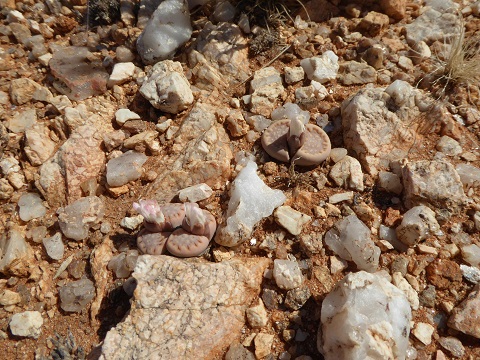
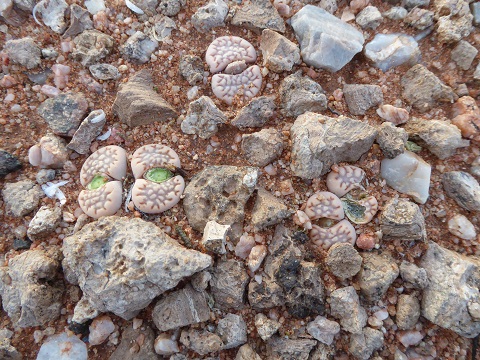
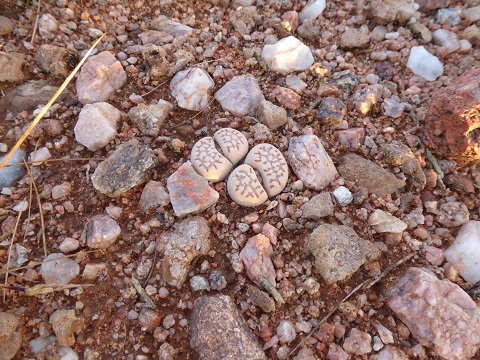
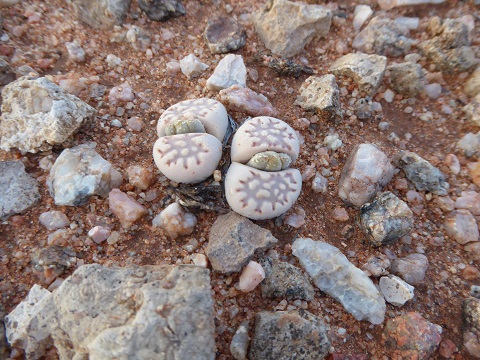
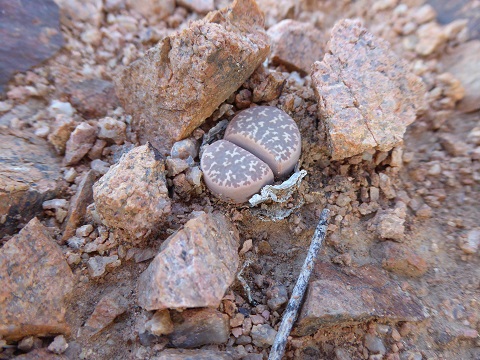
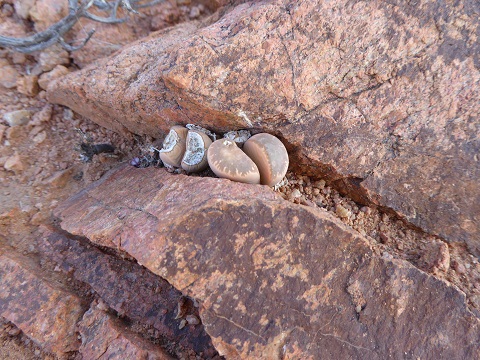
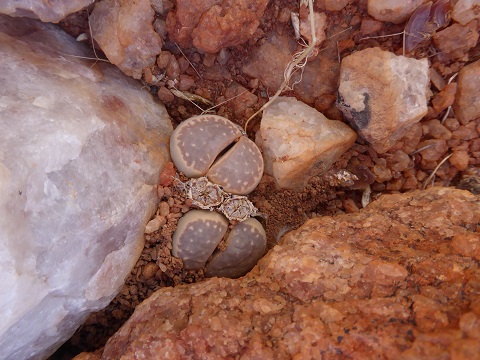
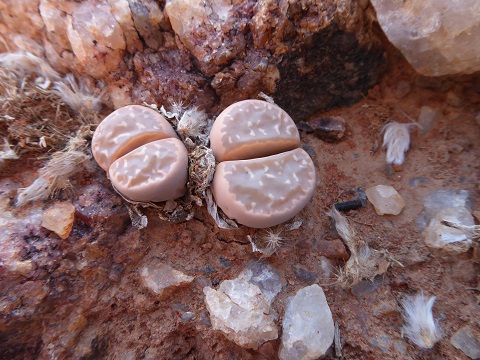
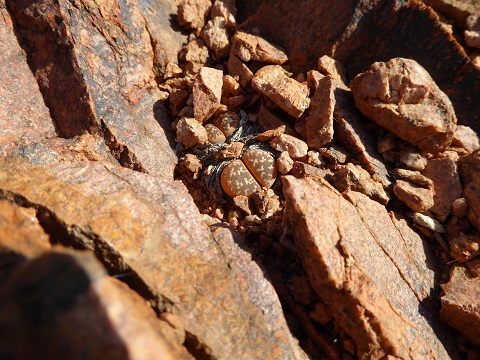
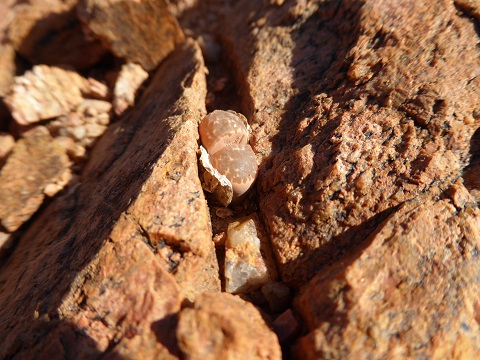
We wasted no time in finding our first new Lithops locality directly we met with Ronnie in Springbok. Some way south of that town he guided us to the only known locality of L. naureeniae, a species that flowers yellow with white centres, named by Professor Desmond Cole for his wife Naureen and designated C304. We found a good number of turgid plants, a few slightly chewed, after a short search among the natural rockery that forms their home. If any Lithops can be described as “tiger striped”, I guess it is these. I perceived a considerable variation in colour, ranging from pinkish-brown (Fig 4) to green (Fig 5) to khaki (Fig 6), with many shades in-between. Some occurred as single heads, others formed small clumps, most had numerous bold islands and all were divergent to varying degrees. There were even some wedged between rock fissures, something I have occasionally noted in several other Lithops species too (Fig 7). The population appeared healthy and the late afternoon sunshine showed everything in a soft warm glow. Happy with the experience we returned to Springbok, and that evening had dinner with Andy Young. All was then set for the following day and the scattering of Terry Smale’s ashes.
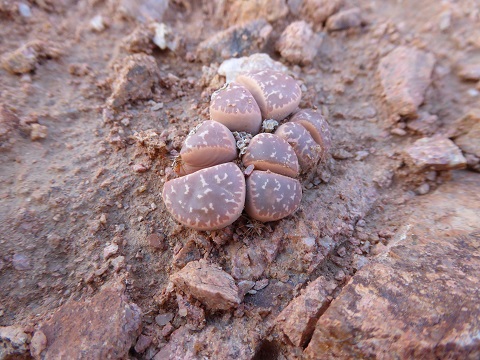
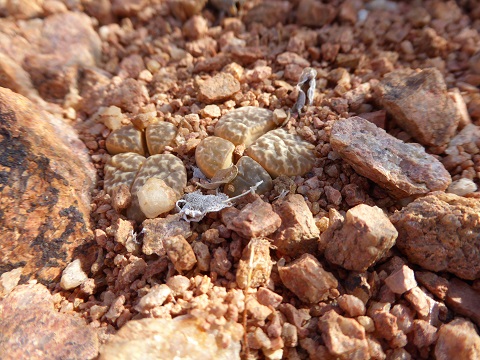
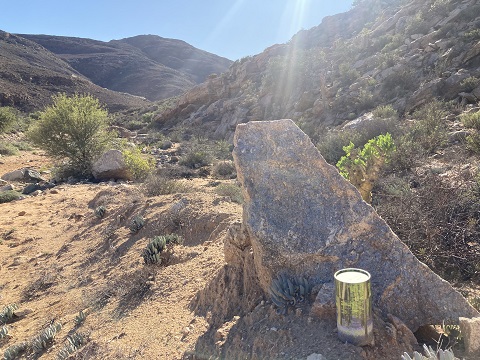
On Sunday April 24th 2022 the four of us met in Steinkopf. Both Andy and I had hired 4X4 vehicles and Ronnie joined Andy who led the way to the C. smaleorum locality. The drive started easily enough on tar and then gravel road, but eventually became torturous as the tracks we were trying to follow had been largely worn away or strewn with debris. Eventually we got to the base of the hill Andy knows to support a colony of C. smaleorum and we stopped there. We could not get any closer with the vehicles lest we caused them damage, but since the wind was blowing in the right direction we decided to do the deed were we were. As ex-chairman of the Mesemb. Study Group I invited Andy to scatter Terry’s ashes which he duly did with the three of us looking on. Andy said this place was “Conophytum Central” with other Conophytum species all around, so there can be no better for Terry to reside (Fig 8). Rest in Peace Terry Smale.
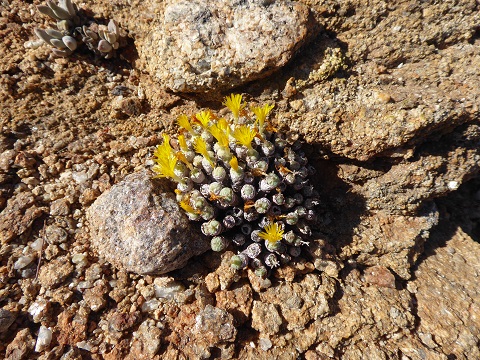
Later in the day we searched extensively around the Umdas area for L. marmorata but were unsuccessful. Perhaps it was just too dry and the Lithops were withdrawn under the dust, or perhaps we simply missed the correct spots. We did however find several interesting taxa of Conophytum in flower, C. ectypum subsp./var. ectypum (Fig 9) and C. flavum subsp. novicium (Fig 10) to name but two. Having Andy there for instant identification was a great bonus.
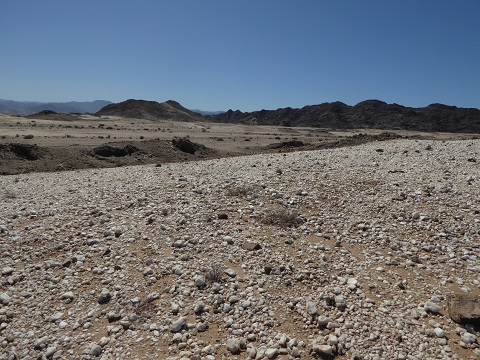
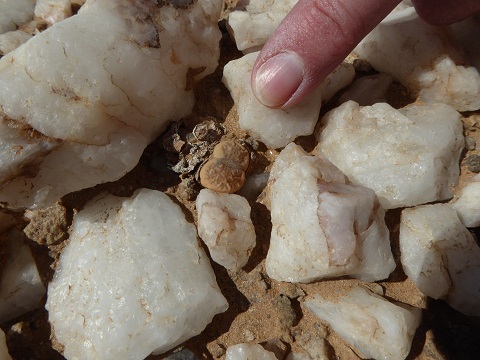
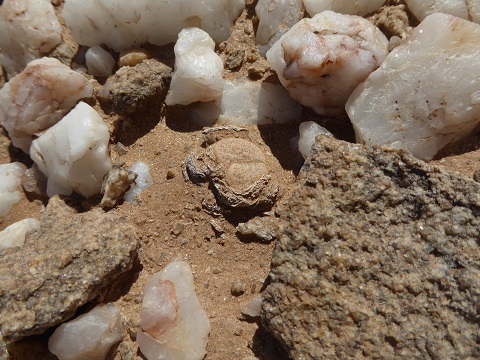
Following a night’s rest in rather chilly Port Nolloth accommodation, we headed north to Sendelingsdrif. It was an easy drive as far as Alexander Bay anyway. Our goal was to meet a botanist at the recently funded BCSS rescue greenhouse where plants recovered from poachers can be looked after until such time they can be returned to the veld. On top of his wider conservation work, he somehow found the time to monitor a population of L. herrei within the Richtersveld National Park. This is another species that flowers yellow with white centres. He told us of the ongoing twelve years of drought in the area that has resulted in the deaths of many plants in the veld. Climate change is undoubtedly to blame, but overgrazing by farm animals which has led to sand encroachment has also played a part. Winters had all but finished in Sendelingsdrif, where in 2017 not a single day recorded a temperature below 30°C! Although he has been told by his paymasters he has zero jurisdiction over the extensive mining operations currently operating within the national park, he is doing his very best to protect the plants that remain. He took us to his monitored L. herrei locality where in 2014 two hundred specimens in a quartzite patch (Fig 11) were counted. When last surveyed only eighteen could be found, and although ours was not a comprehensive assessment, on this visit we only saw four. Whilst more plants could have been there, just dust covered and out of sight, the colony was clearly struggling along with every other native species. The further north and west we travelled the harsher recent weather conditions appeared to have been. Most L. herrei here (possibly C213) are known to be the maculate form with mostly occluded windows, and the plants we saw went along with that (Figs 12 & 13). It was good to see them anyway, where even in their desiccated state, seed capsules were present. I live in hope the rains will one day return, leading to many other L. herrei sprouting forth and a wider recovery of native vegetation.
Debbie, Ronnie and I parted company with Andy here and headed back to Port Nolloth via a well-known lichen field outside of Alexander Bay where we expected to see another example of L. herrei. Unfortunately we were unsuccessful, only turning up copious quantities of dead vegetation, empty snail shells and windblown lichen. I think it likely the dry conditions were to blame causing the plants to retract out of sight. Quite possibly we had been harmlessly walking over them.
Early next morning we departed Port Nolloth and began an extended drive back to Springbok, targeting localities for L. meyeri and L. geyeri, two more species that flower yellow with white centres. After protracted searches among the quartzite patches of the plains north of Lekkersing, Debbie finally found some gorgeous specimens of L. meyeri taking partial shelter behind some low brown rocks, completely outside of the quartz (Fig 14). The extremely dry conditions had clearly affected the plants which were heavily wrinkled, yet looked all the more delightful because of it. A few were partially buried in the substrate, something rarely seen in cultivation (Fig 15), and there was evidence of insect or rodent damage on others. The saying “tough as old boots” (Fig 16) came to mind, given the extreme conditions these opal wonders clearly had to endure. Whilst it is impossible to know if our tiny spot was historically part of a wider Cole locality, it seemed unique to me. Once the rains return the colony will thrive, but in this part of the world it is anyone’s guess when that will be
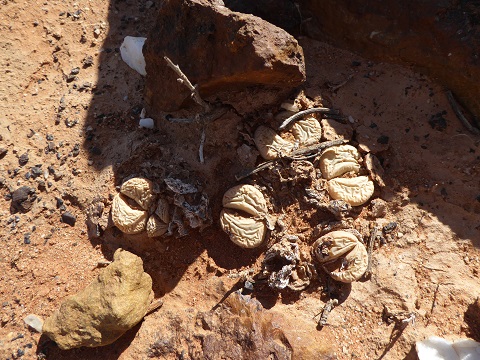
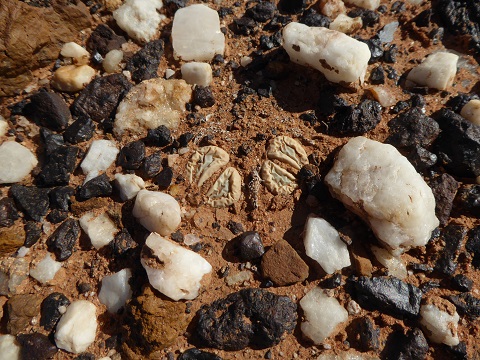
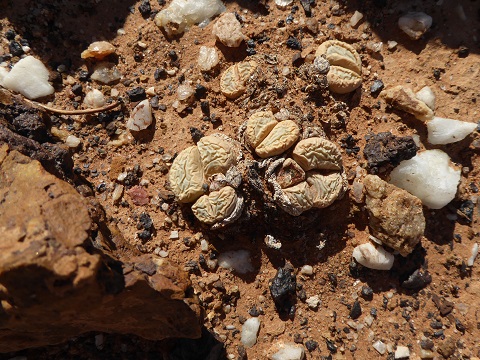
A prolonged search of a known L. geyeri locality outside of Eksteenfontein that afternoon proved unsuccessful, unless that is you were looking for dead succulents. Perhaps the Lithops were just under the surface, perhaps not, but here the parched conditions simply conspired against us.
After an overnight stay in a Springbok guest house we headed north to the only known locality of L. helmutii, part of which just happens to be atop a rather large, rock strewn hill. This is yet another species that has yellow with white centre flowers. The climb to see these plants designated C271 by the Coles was a steady plod up over many botanic gems I could not identify. After about half an hour we had reached the summit, only for Ronnie to then realise it was the wrong hill! Down we went, and then over to the neighbouring larger hill to repeat the process all over again. I am not as young as I used to be, but the cardio-vascular workout was rewarded many times over when at last we found L. helmutii. Emeralds in the grit, they were a spectacular bottle green vision. Large clusters, small groups and individual plants were dotted around in another beautiful natural rockery (Figs 17, 18, 19 & 20). Although many plants here were again wrinkled and in a few cases naturally scarred, the seed capsules held aloft gave hope for the future. In spite of the howling wind, the squint inducing sunlight and a touch of vertigo, I savoured the moment.
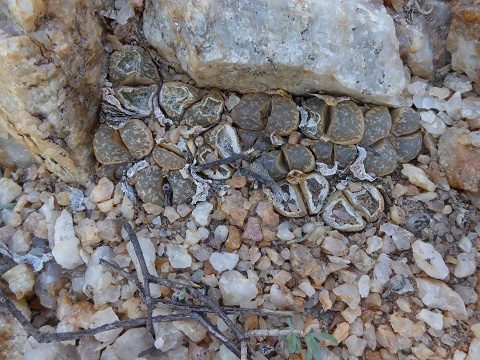
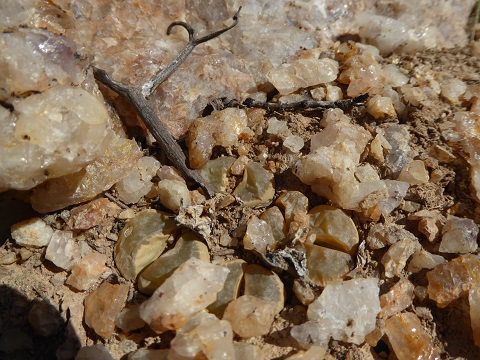
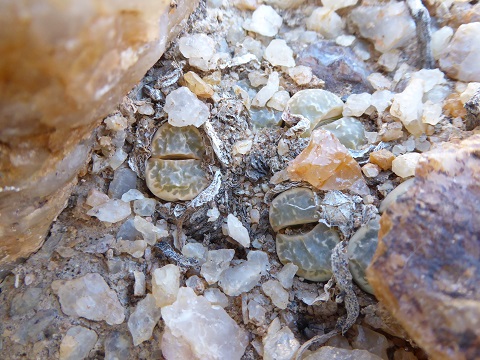
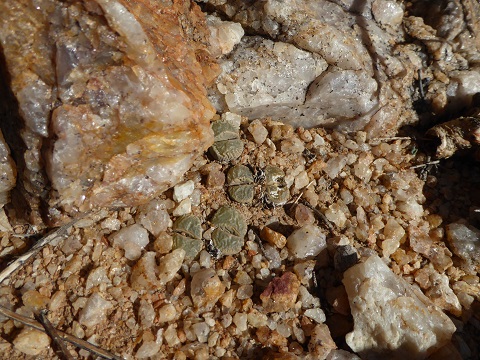
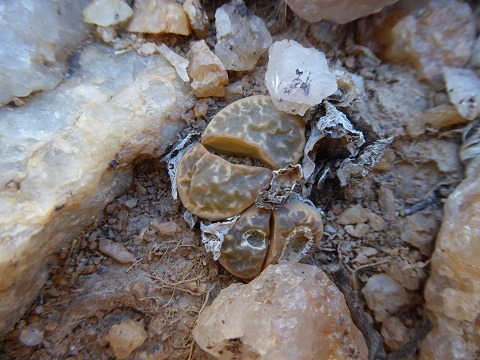
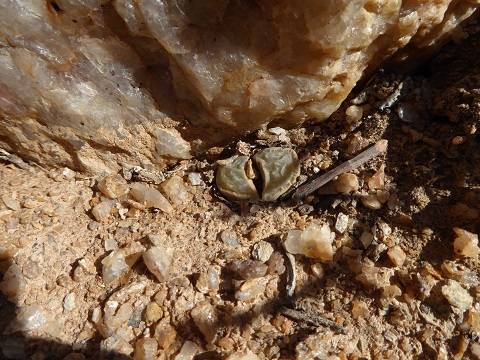
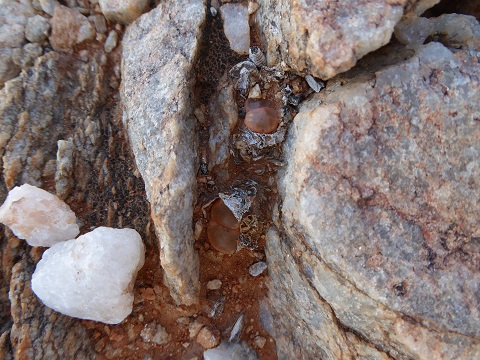
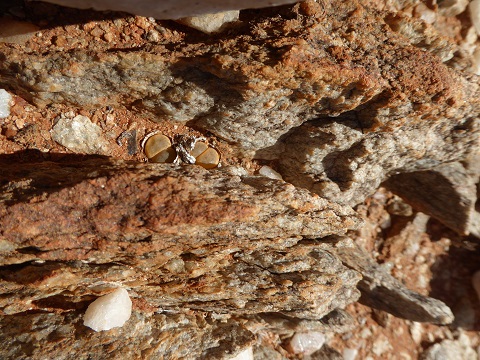
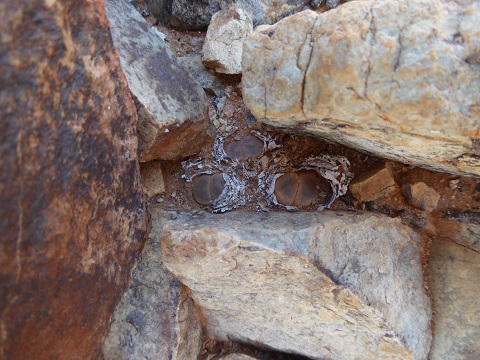
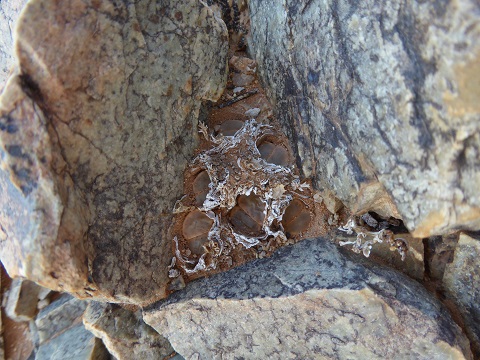
Further north we found a locality of L. dinteri subsp. dinteri var. brevis, this time a taxa that produces pure yellow flowers. An initial search in the quartz revealed a few specimens, but many more were found within the fissures and narrow gaps of quite dark rocks close by. I was surprised by this as I would have thought the much lighter quartz would have reflected more heat than the darker rocks, making survival a little easier. It was obvious however that whilst the plants before us were currently baking in the mid-day sun, they would receive shade within the next couple of hours. We found numerous tiny, multi-headed specimens deeply suntanned, showing off their open windows banded by buff margins. Many were embedded in years of old growth, and on close inspection some had faint rubrications within their open windows too (Figs 21, 22 & 23). The term has been used before, but these really were little gems.
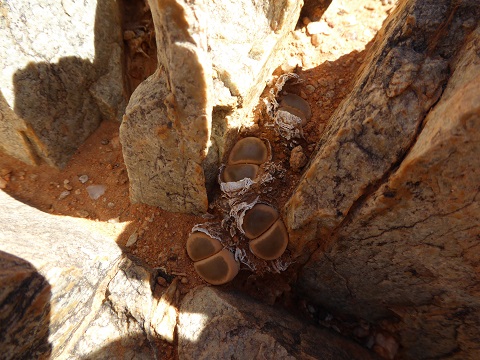
Subsequently we searched unsuccessfully for L. marmorata at two localities before returning to Springbok for the night. We then bade goodbye to Ronnie who was leaving early the next morning, and thanked him sincerely for his company and help. We had done very well to see the plants we had, but ironically the most common and widespread species in the area, the white flowering L. marmorata, had eluded us. Yet thanks to some phone calls we were able to rectify that matter a couple of days later.
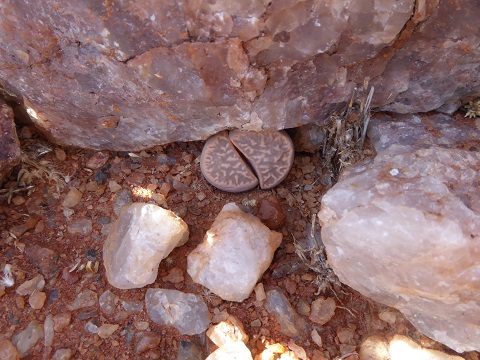
East of Springbok we were allowed to visit a farm where we soon found some wonderful specimens of L. marmorata var. marmorata growing on some rubble strewn koppies, and for once it was me who found the first (Fig 24). The plants here were mostly in excellent condition, but as is usual in habitat a few life scars were also apparent (Figs 25). Heads were reasonably chunky and often growing hard up against rocks which obviously gave them some respite from the fierce sun. Some seemed to have an almost pinkish hue, whilst others were brownish or grey. It could even be they look different depending on what time of day you see them (Fig 26). This farm was another that had in recent years struggled with heat and water shortage, but where wild Lithops flourished. We were subsequently invited into the farmhouse and once again treated to some most appreciated hospitality.
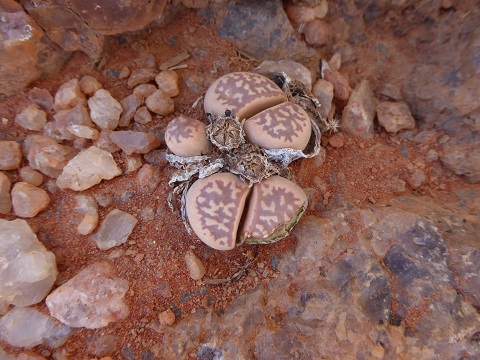
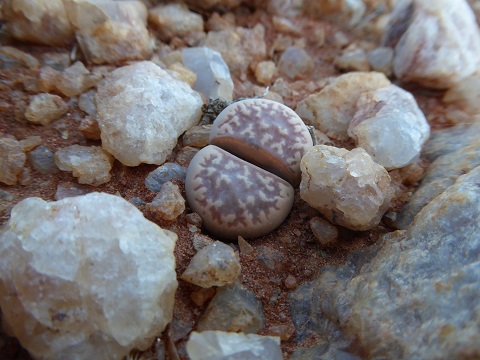
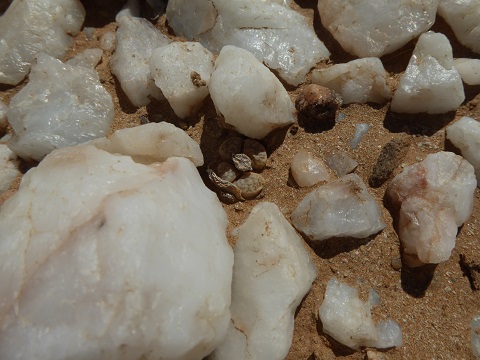
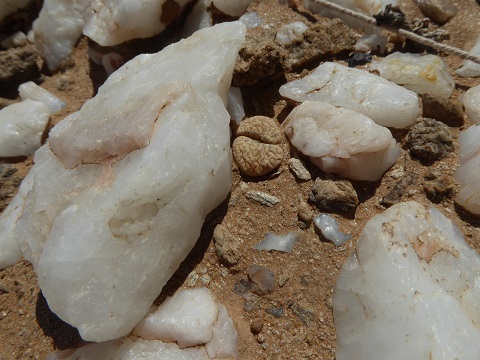
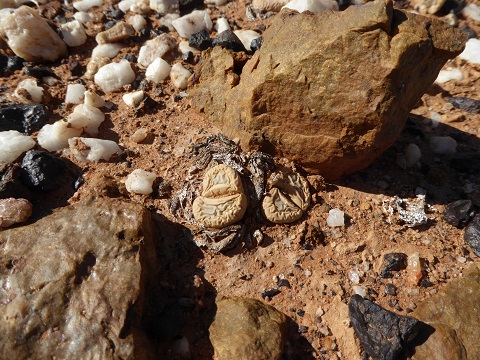
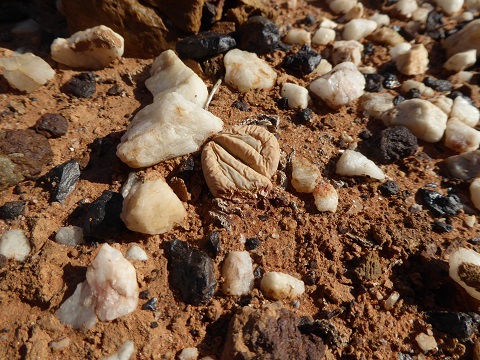
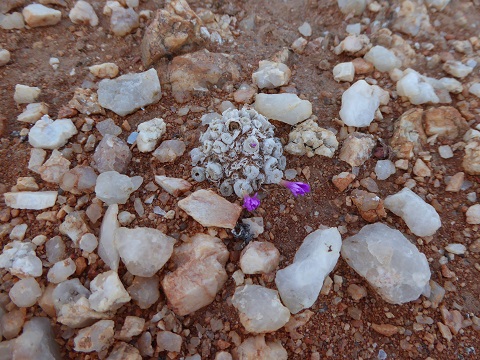
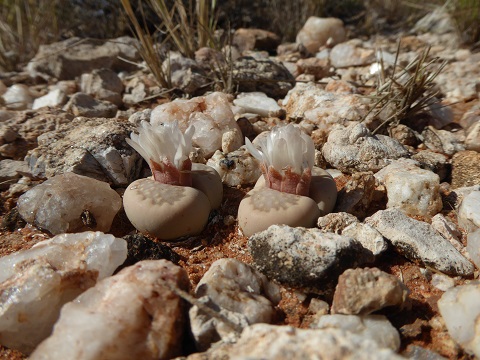
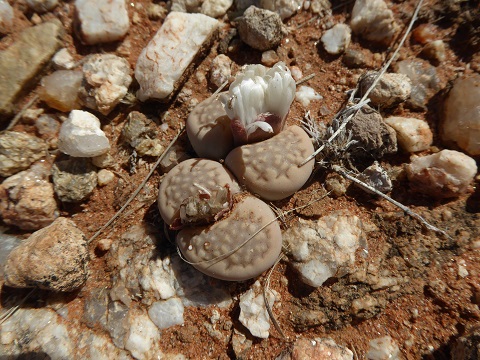
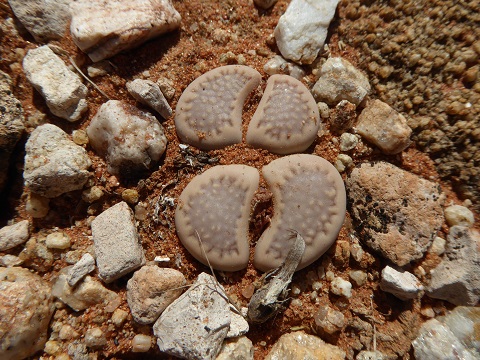
When finally we made it all the way back to Upington we were taken by a local resident to explore for L. hallii at three localities. We failed to find the correct spots at two of those, but turned up trumps at a place I had unsuccessfully searched on two previous visits. It just goes to show that if you don’t find Lithops in the veld, it does not necessarily mean they are not there. Within the detritus of humans, we found flowering specimens of L. hallii var. hallii resplendent with white flowers (Figs 27 & 28). A recent plague of locusts had been eradicated by large scale insecticide use, and now numerous insect corpses lay among the Lithops (Fig 29). It was third time lucky and a great way to round off our trip.
As an aside, the whole of the skyline around Upington is now dominated by the “Sun Tower” (top of page image), a huge structure at the centre of a solar generation plant. You just can’t miss it!
I give thanks to my wife Debra for all of her support and eagle-eyed Lithops spotting, to Ronnie for his enduring help in the veld and to Andy Young for his sterling efforts with getting us to the locality of C. smaleorum. For the record I state that as always, no plants or seed whatever were damaged or removed from habitat during this trip.
The following habitat photographs were taken during this trip but not submitted for publication elsewhere.